Introduction
Welcome to Thailand — the Land of Smiles. A country that feels like a constantly evolving adventure: ancient temples, pristine beaches, vibrant street food, and laid-back island vibes. After spending two months there, Courtney Lynn Muro has put together a comprehensive guide to help you plan a luxe-but-affordable trip. Whether you’re drawn by culture, food, nature, or just good times, this guide is your starting point.
What Makes Thailand Special
Thailand is more than just a tourist destination — it’s a place of contrasts. On one hand, you have serene monasteries, national parks, and floating markets; on the other, there are neon-light nights, partying backpackers, and “fuck-it buckets”. But what truly defines Thailand is the accessibility: your money goes a lot further, and the richness of experience is unmatched.
- Culture: Thousands of temples — such as Wat Pho, Wat Arun, and the Grand Palace in Bangkok — showcase Thailand’s deep spiritual roots.
- Food: Thai street food is world-renowned, and markets give you a taste of real local life.
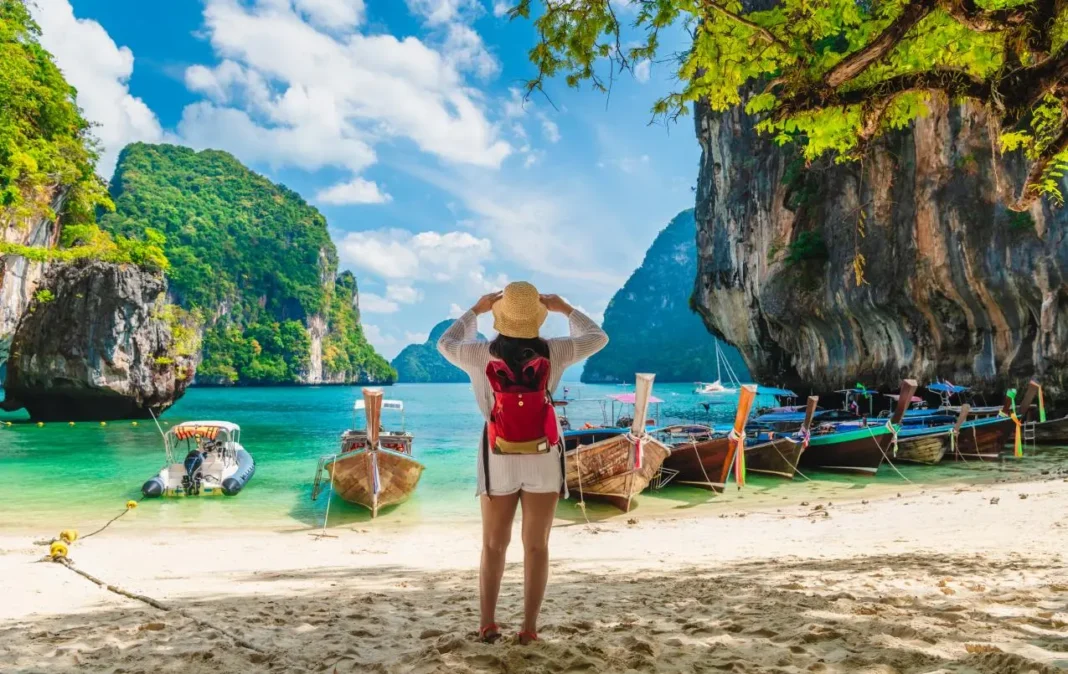
- Nature: From the limestone cliffs of Khao Sok National Park to the idyllic islands like Koh Samui, Krabi, and Phuket, the variety in landscapes is astounding.
- Tourism Realities: While the “elephant sanctuaries” are very popular, Courtney warns that not all are ethical. Activities like riding or bathing elephants are often exploitative — she recommends sanctuaries where you can feed, walk with, or observe elephants instead.
- Backpack Culture: Part of Thailand’s charm is its backpacker scene — “drunk backpackers” and cheap-but-brand experiences coexist in a way that’s uniquely Thai.
Best Time to Visit
- Ideal months: November to April — cooler weather and less rain.
- High season: Peak travel times (like Christmas and New Year) are very expensive. According to Courtney, you could pay 2–4× more for hotels.
- Low / Monsoon season: June to October is rainy, but this can work to your advantage — fewer crowds and much lower prices.
- Hot season: March to May — very warm, especially inland, though coastal regions benefit from sea breezes.
Cost Breakdown: How Much to Budget
Courtney’s guide is especially useful for budget-conscious travelers — but not at the cost of experience.
- Accommodation: Ten years ago, you could stay in a nice hotel for ~$20/night. Now, that figure is closer to ~$100 for nicer places.
- Food:
- Street food: approx. $1 per meal (yes, really).
- Restaurants: up to ~$30 for a more upscale or tourist-friendly place.
- Total trip cost (example): For a 3-week itinerary, Courtney and her partner spent US$5,000 (for two people), after using credit card rewards to book flights and some hotels.
- Currency: The Thai Baht (THB) is relatively stable; Courtney reports a rate of around 35 THB = 1 USD.
Getting There: Flights
If you’re flying from the U.S.:
- Use Bangkok (BKK) as your main hub — it’s the most common entry point.
- Courtney and her partner flew SFO → Seattle → Seoul → Bangkok, using 105,000 SkyMiles + ~$37.
- Return trip: Bangkok → Singapore → SFO. They used AmEx points (140,000) + ~$232.
- Pro tip: Open a Delta or AmEx card early if you want to replicate their rewards-driven strategy.
Getting Around in Thailand
Transportation is incredibly affordable and varied:
- Overland:
- Tuk-tuk & taxis: $1–$5 for short rides.
- Buses or trains: often less than $1 for local travel.
- Private bus (for longer legs): ~$50 for a full day — this can be a great deal if you’re traveling in a small group.
- Motorbike rental: $5–$10/day (if you’re okay riding)
- Overwater (island hopping):
- Speedboats: fastest, but bumpy and less comfortable. Courtney warns about seasickness, especially around party islands.
- Speed ferries: more stable, air-conditioned, mid-range pricing.
- Regular ferries: slowest but safest and cheapest. She recommends Lomprayah as a reliable company.
How Long to Stay
Courtney suggests 3 weeks as the sweet spot:
- Shorter stays (like 2 weeks) feel rushed.
- Longer stays (1 month or more) can become exhausting, especially given the transportation involved.
- Her 3-week plan involves traveling overland + by ferry, which she argues is more authentic and relaxing.
Organized Tours vs. Independent Travel
Her advice? Skip all-inclusive resorts and tour packages.
- Thailand is a safe country where a lot of people speak English — so self-exploration is very feasible.
- All-inclusive places keep you insulated from the real Thailand and funnel money into big corporations.
- By staying in hotels (rather than Airbnbs), you’ll benefit from concierge help, which is useful in places where navigating transport can be confusing.

Travel Style: Solo, Couple, or Group?
- Courtney thinks Thailand is inherently social: it’s a great country for group travel because transport (like private buses) can be shared.
- But she also traveled with just her husband and had a wonderful time — for couples or solo travelers, meeting people on the road is very possible.
- Her recommendation: bring friends if you can, but don’t worry if you’re alone — Thailand has a way of connecting you with others.
Elephant Sanctuaries — Handle With Care
This is one of her more serious, ethical notes:
- Many elephant sanctuaries marketed to tourists are not actually ethical.
- Activities like riding or bathing elephants are typically signs of exploitation.
- She recommends looking for sanctuaries where the experience is about observing, feeding, or walking with elephants.
- Safety-wise: she mentions a case where a tourist died after bathing an elephant — highlighting that some “tourist-elephant interactions” can be dangerous.
Safety in Thailand
- Courtney believes Thailand is fairly safe: violent crime against tourists is low, but petty theft does happen.
- As with any destination, stay alert, especially with valuables, but don’t let fear stop you from exploring.
Pro Tips (From Real Experience)
- Don’t procrastinate booking: Post-COVID, tourism is ramping back up and booking late means higher prices.
- Pack the right electronics: Specifically, bring the correct power adapter for Thailand — she learned the hard way with her hair dryer.
- Leverage credit-card points: Use rewards to cover big-ticket costs (flights, hotels) and make your trip more affordable.
- Travel light, move wisely: Use a combination of buses and ferries; not only does this save cost, but it makes for a more authentic and flexible trip.
Preview: The 3-Week Itinerary
Courtney teases a detailed itinerary (in parts 2–4 of her series) for a 3-week trip covering:
- Bangkok & the North (Part 2)
- Southern Thailand (Islands & Beaches) (Part 3)
- The Gulf Islands (Part 4)
She even includes a hand-drawn trip map for her proposed route.
Final Thoughts
This guide is a fantastic resource if:
- You’re planning a budget-conscious but high-experience trip to Thailand.
- You want an authentic travel style — not just resort life.
- You care about ethical tourism, especially when it comes to interactions with elephants.
- You’re using or willing to use credit card rewards to stretch your budget.
If you follow Courtney’s advice, you can enjoy the richness of Thailand — its food, its landscapes, its people — without breaking the bank. And you’ll have a well-rounded, thoughtful trip.